Sustainable Regenerative Farming

Sustainable Regenerative Farming, the green future for dairy farming. Save the cheesemakers, save the world. Sustainable Regenerative Farming, the green future for dairy farming. Save the cheesemakers, save the world.

It was recently discovered that agrochemical farming in the UK has left Britain’s soil 30 to 40 years away from complete loss of fertility. This would have huge knock on effects for industries across the UK and while the government has issued guidelines on this, in practice very little has been done. Especially considering a potential drop in food standards post Brexit.

Pretty bleak.

Enter regenerative farming. There is a new wave of farmer in the UK valuing environmental impact over short term economic gains. Regenerative farming means increasing nutrients in the soil to absorb carbon output from livestock, increasing harvest yield and improving quality of agricultural output.

The act of regenerating the soil is achieved in various ways and differs farm to farm. Soil disturbance is reduced, biodiversity is increased / encouraged and carbon emissions are trapped in the soil to offset what’s released into the atmosphere. This has a twofold benefit for the farms, not only are the emissions balanced, the farms see higher yields year on year.

A quick bit of science – The nutrients referred to earlier in the piece refer specifically to fungi (fungal hyphae). The fungi are able to deliver nutrients to the plants that wouldn’t ordinarily be available, while at the same time absorbing carbon dioxide from the air and turning it into stable organic compounds in the soil.

The reason that the methods differ so much farm to farm were put nicely by Becky at Hafod farm in west wales “most products work back from the cheese that needs to be produced. In sustainable or regenerative farming, we work with what’s available to us in terms of natural resources. Ie we look at the hill and work out what it needs and what can be produced. Which is why whilst we use the same methods to produce our cheese, each cheese is entirely unique”.

Hafod farm is a good case in point on this. Patrick, who’s worked the farm now for over 40 years has set up an organization called the sustainable food trust which focusses on providing information to farmers based on his and others’ experiences in creating a sustainable farm.

His farm and the techniques they use haven’t changed much since he first started out. In this time, he has come to the conclusion that “all farming is about ecosystems management. Truly sustainable food production is related to one’s capacity to intervene in a timely way, maintaining and hopefully building the natural capital of the farm, such as healthy soil and biodiversity, over which one has stewardship, whilst at the same time harvesting a surplus of nutritious food.”

This theory on sustainable food production through ecosystem management was corroborated by an EU thinktank named the IDDRI, who concluded that “if we stop (or reduce) the practice of feeding livestock cereals we could feed the growing population of Europe by 2050 on entirely organically produced foods.”

Their method, of working from what’s naturally available to them differs greatly to even some of the farms that border them. Agrochemical farming uses pesticides and chemicals to create an environment unnatural to that area and results in infertile and ultimately unusable soil. This is born out of the obsession with constant expansion and scale, in order to meet increasingly competitive supermarket demand. Despite a race to the bottom in terms of supermarket pricing, AHDB’s consumer survey concluded that 80% of UK consumers would pay more for local and organic milk.

Similar stories to Hafod are being replicated hundreds of times over on small farms all over the country and Europe.

The Jones brothers, at Lincolnshire Poacher, for example, plant clover on their farm as they are an excellent natural way of fixing nitrogen within the soil. ‘It takes over a tonne of oil to produce a tonne of nitrogen, so by removing nitrogen from our farm, we are reducing the impact to the environment.’

They have a number of excellent sustainable mechanisms helping power and run their farm. Bio-mass boilers fuelled by sustainably sourced wood pellets that provide all of their heating needs, solar panels that produce 50kw of electricity, enough for all parts of the business on a sunny day and an achievable long-term goal of the farm becoming carbon neutral. In fact, to show the feasibility of this statement, all you have to do is look at Winterdale cheese in Kent who have already successfully produced the world’s first carbon neutral cheese.

Small Dairy vs Big Dairy

It’s time to talk veganism. The truth is, it is the vegan movement, and slogans like ‘Dairy is Scary’, which in reality apply to large scale, big dairy, that have really accelerated a shift to small, regenerative, sustainable dairy farming.

Far from fighting veganism, small dairy is looking seriously at concerns raised by the vegan philosophy and working to improve both animal welfare on farms and the environmental impact of farms. Whilst already progressive in this regard, there is no doubt the spotlight that has been shone on the dairy industry as a whole, has accelerated this evolution.

In the UK, 13 Dairy farms produce the same amount of emissions as all of the other dairy farms combined. The biggest polluters on a dairy farm are the livestock, so therefore, the smaller the herd, the lower and more manageable the emissions.

It should come as no surprise to you that all of the farms that cheesegeek work with fall under the small dairy category and closer resemble the old-fashioned picture of cows grazing in a sunny field than they do large sheds with cattle packed in. Continuing to work with, encourage and support these farms drives the demand for more farms like this to emerge and if it can also discourage larger dairy producers from continuing to grow their production then it’s a win win. Ultimately, if demand shifts, so will the producers. There is no doubt, as mentioned earlier, consumers are now assessing more than just price when making purchasing decisions. Never has provenance, ethics and environmental standards been more important, an incredibly powerful and positive trend.

The benefits of these small, artisan dairy farms becoming more sustainable are huge, not least for the environment but also for animal welfare. Each of these farms are looking carefully at their animal welfare and it has become very clear (some would say obviously) that the happier the animals the better the products. This debate becomes particularly poignant now that a law was recently voted down that would have protected agricultural standards in the UK. We can look at the US as case and point as to why these protections are so vital. Mass (superscale) producers, facilitated by the fact land prices are so much cheaper in the US, are willing and able to drive retail prices for supermarkets below that of cost in order to price smaller dairies out of the industry. Sadly, due in no small part to these practices, 93% of family run farms in the US have been forced to shut.

Going back to Patrick at Hafod, he puts it perfectly when he says that ‘cheap cheese’ is an illusion…utterly misleading. Because it doesn’t take into account the cost to the environment, and our land, which will have to be paid for in the future. By buying higher quality, sustainable, and ethical food now, the extra price is the price we should all be willing to pay for our futures, and those of our children, and their children. Compared on those terms, the ‘cheap cheese’ is really the artisan cheese.

So, our “Save the cheesemakers, save the world” slogan is more than just a play on the famous line from cult series ‘Heroes’. Its purpose is to draw attention to the relative knife edge that our dairy producers find themselves on. If consumers insist on higher quality, sustainable goods then there’s no market that exists for factory or agrochemical farming, and it will result in sustainable, ethical and regenerative farming becoming not only economically viable, but the norm. Every single decision we make about buying cheese has a real impact on our land, and world that we live in…we hold the power.

Save the cheesemakers, save the world.

Back to blog

October's seasonal cheese selection

Each month we curate 5 of the finest cheeses the UK has to offer. They highlight quality craftmanship, complex flavour profiles and form the backbone of our gifts and subscriptions.

1 of ProductListDrop
cheesegeek Bibury
Bibury
Semi hard

A sheep's milk cheese made with milk from the flock at Sheaf House Farm just up the road in Gloucestershire. Made only seasonally from late March, Bibury comes to life in Autumn. Classic notes of meadow flowers and hay along with white chocolate and a fondant texture that is very appealing.


cheesegeek Swift Reserve
Swift Reserve

3 total reviews

HARD

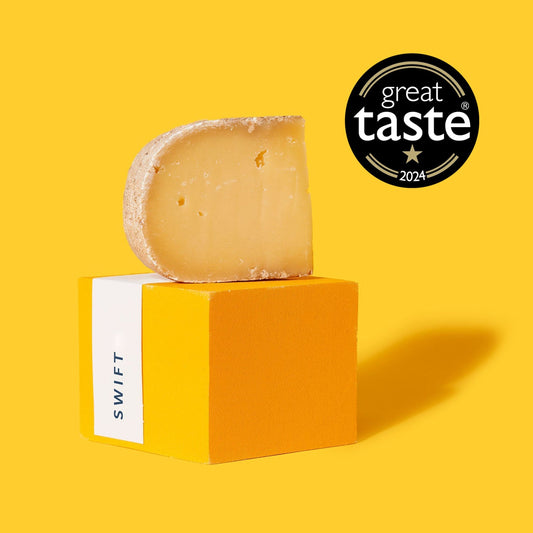
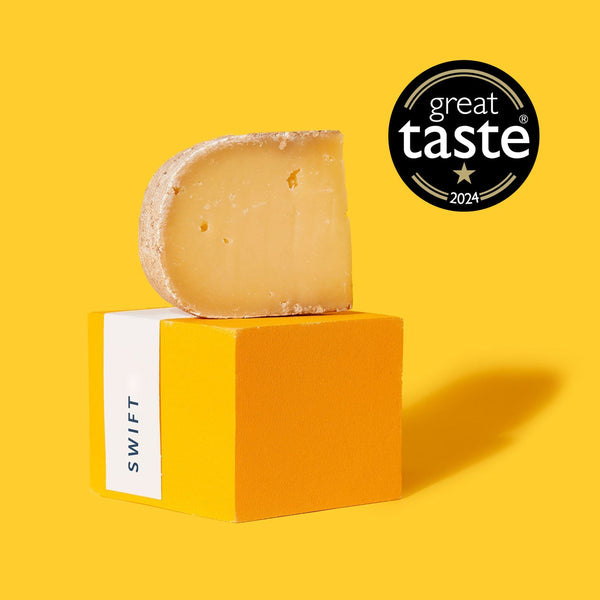
A scintillating 9-month aged gouda style cheese. 

If there was ever a Goldilocks gouda, then this is it. Just young enough to be supple, buttery, nutty sweet and unbelievably moreish, yet old enough to have developed a slightly weathered earthiness and rich complexity. We reckon this tastes like liberally buttered jacket potato skins. Oh, and finish is a joy to behold, long, sweet and delightful.

To top it off Swift Reserve pairs perfectly with coffee (yes, coffee). Transport yourself to the Med and enjoy a wedge of cheese with your morning caffeine. Keeping you fuller for longer and tasting shockingly good, it'll soon become part of your breakfast routine. Exclusive to cheesegeek.

Look out for the Swift Black coming soon to one of London's most exciting coffee specialists!

cheesegeek Quicke's Mature Cheddar
Quicke's Mature Cheddar
HARD

Mature, and not in a dull, doesn't like to leave the house way. Quicke's Mature is just fully developed. Quicke's the makers date back to 1540s so they know how to make goooood cheese. Handcrafted using grass-fed cow milk, this well rounded cheddar is typically matured for 12-18 months (hence the name) and brings you a variety of flavours from brothy to buttery to freshly mown grass and baked potato flavours. Always with the characteristic cheddar tang.

cheesegeek Washington
Washington

2 total reviews

SOFT

British cider-washed soft cheese

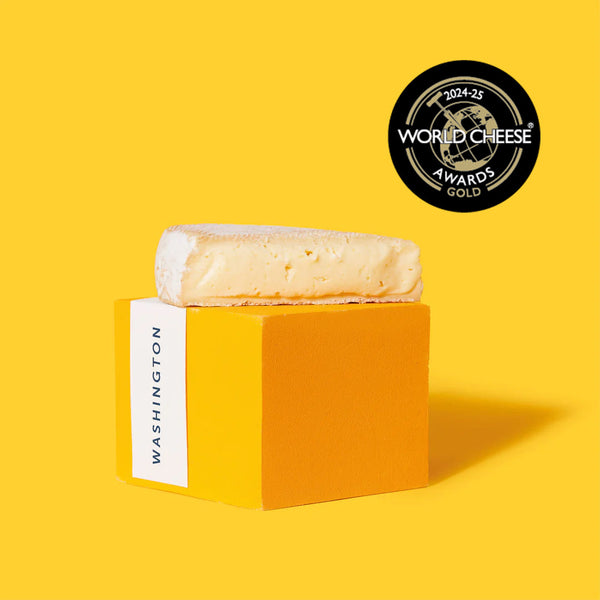
An unforgettable soft cheese, washed in cider. 

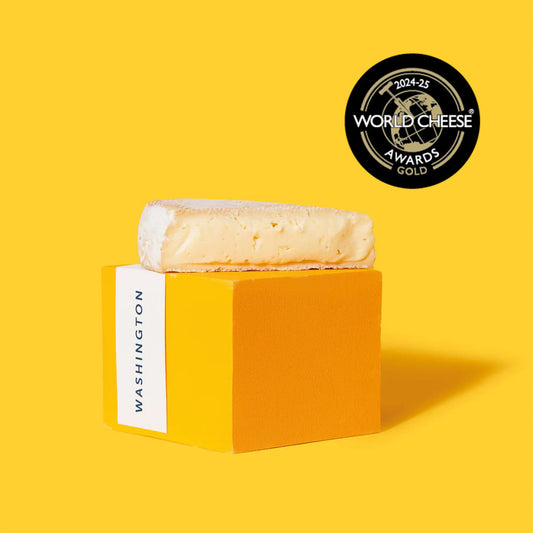
A testament to British cheesemaking, and a nod to continental cheesemaking. Washington is a washed rind cheese destined for great things. When slightly younger, the flavours are fresher and crisper, with just a hint of fruitiness. Ripened on, it develops deep, savoury, meaty flavour, a bit like those famous continental pongers like Epoisses. However, the cider wash brings an astonishing fermented fruity funk, balancing the savoury flavours perfectly, all playing out amidst the most tantalising creamy, decadent, luxurious texture. A modern take on history, and a cheese for the ages.

cheesegeek Perl Las
Cornish Blue
BLUE

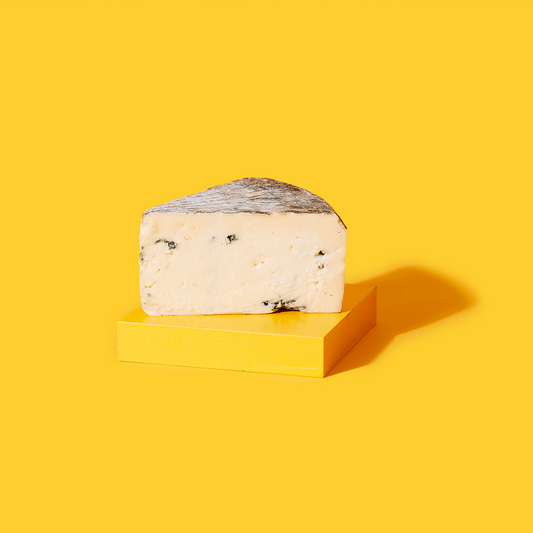
Designed to be eaten as a young cheese, Cornish Blue is a very different product from traditional English blue cheeses. Its flavour is mild and creamy, with a dense texture and buttery richness, instead of the ‘salty tang’ common of other traditional blue cheeses it has a gentle sweetness.

November's seasonal cheese selection

Each month we curate 5 of the finest cheeses the UK has to offer. They highlight quality craftsmanship, complex flavour profiles and form the backbone of our gifts and subscriptions.

1 of ProductListDrop
cheesegeek 200g Rutland Red
Rutland Red
HARD

**Just voted 8th best cheese in World** One of the few remaining Red Leicester cheeses made in Leicestershire, Rutland Red is made in a special dedicated cheese room at Long Clawson Stilton makers. This beaut is so buttery and nutty sweet with a finish reminiscent of a creme brulee and a striking deep red colour that is unmistakable on a cheeseboard making it a firm favourite at cheesegeek. We're not the only ones to think so as Rutland Red just won 8th best cheese in the world (over 5,200 entries!) at the most prestigious 2025 World Cheese Awards. Red Leicester is a classic on any cheeseboard and is also one of our top picks to cook with, Cauliflower Cheese we're looking at you!!

cheesegeek Cornish Kern
Cornish Kern

6 total reviews

HARD

From Lynher Dairies, the makers of Cornish Yarg and Garlic Yarg, we welcome Cornish Kern—a stonker of a cheese. This beaut is off the chart with flavour. Encased in black wax, it is made in the style of a Gouda, however, the utilisation of Alpine starter cultures gives the cheese multiple dimensions. It has a real fruity twang, something like from an old sweet shop, except cheesy. Think exotic dried fruits, salted caramel, toasted hazelnuts and almonds, and although savoury, it simply tempts and teases you with a little bit of nutty buttery sweetness. All the flavours just linger beautifully in your mouth for the perfect amount of time. Its crumbly, crisp and slate-like texture simply arouses one's senses to another planet. An absolute worldy cheese....literally.

cheesegeek Burford
Burford
Semi hard

King Stone Dairy's longest aged, largest cheese. Originally conceived as a way to capture the sweet complexity of Summer pastures, Burford is now made year round and reflects the seasonality of the milk at Manor Farm. Flavours of charcuterie, hazelnut and hints of tropical fruit.


The Cheese Geek 250g Tunworth
Dozmary
SOFT

A bold soft cheese inspired by the wild beauty and legend of Bodmin Moor. Named after the mystical Dozmary Pool said to be the resting place of King Arthur’s Excalibur, it carries the same sense of drama and heritage.

It has been developed as a richer, more flavourful evolution of the Cornish Camembert, Dozmary is oozy, buttery, and bursting with character.

The Cheese Geek Cashel Blue
Crozier Blue
BLUE

Crozier Blue is an Irish sheep's milk cheese modelled loosely on a Roquefort, that has a rich, full and well-rounded flavour. It is gently salty with a distinctly rich creamy texture, offset by a touch of spice.

December's seasonal cheese selection

Each month we curate 5 of the finest cheeses the UK has to offer. They highlight quality craftsmanship, complex flavour profiles and form the backbone of our gifts and subscriptions.

1 of ProductListDrop
The Cheese Geek Old Roan Wensleydale
Yoredale

4 total reviews

Made at Curlew Dairy by husband and wife Ben & Sam, Yoredale (formerly Old Roan) represents one of the only truly traditional, raw milk Wensleydale cheeses still made in the UK. As well as being a stonker of a Wensleydale, we were rather captured by the Yoredale's journey. The milk travels a whole 5 metres (or 500cm) from milking parlour to processing room. Then, having been matured for 3-4 months it makes its way to you...via us! Unlike block Wensleydale, the manual, handmade, small batch nature of this traditional clothbound Wensleydale results in so much more complexity. It has the tell tale bite in the centre, but carries an incredible stoney, mineral earthiness closer to the rind, where you also start getting the most wonderful breakdown in the cheese. There are more hidden themes here than The Matrix, and it is a great nod to traditional cheesemaking

cheesegeek Lincolnshire Red
Lincolnshire Red
This beaut gives you everything a great Cheddar should, but on top of that, another layer of deep burnt butter, nutty happiness. It has an intense moist yet creamy texture, with a delicate and elegant buttery flavour that matches with a lingering clean flavour. Theres no denying that this Lincolnshire Red is a promising winner on any cheese board.
The Cheese Geek Keen's Cheddar
Keen's Cheddar

4 total reviews

Along with Westcombe, Pitchfork, and Montgomery’s, Keen's is one of the last traditional raw milk artisan Somerset Cheddars. This is due to the fact the criteria are so much stricter than those for West Country Farmhouse Cheddars. The production process uses raw untreated milk from their grass-fed herd, with pint starters rather than powder, traditional animal rennet, and a clothbound maturation of at least 12 months.

The result is a strong, tangy cheddar with a mellow depth of flavour, occasionally blueing throughout. A standout traditional cheddar that is keeping its place firmly in the classic cheese world.

cheesegeek Rollright
Rollright

26 total reviews

If Cheese = Xmas and Xmas = Vacherin then you could be forgiven for assuming Xmas would be cancelled this year due to LSD (not that one) and its impact on supply of Vacherin this year.

But fortunately, thanks to a lesser known but equally mighty British cheese called Rollright, Xmas might just be saved after all.Made in Gloucestershire, it is wrapped in spruce imported from the continent, just the same as is used on traditional Vacherin, and it is made with milk from a single herd of rare breed cows that actually feed on grass even through the winter.

It is great baked, equally great spooned, but crucially it will give you everything you've come to know and love about a Vacherin, and arguably more.

Rollright. Saving Christmas 2025

cheesegeek Long Clawson Stilton
Long Clawson Stilton

5 total reviews

The heavyweight of all cheeses, Santa's favourite cheese, and Christmas on a plate... it's Stilton.

After months of blind-taste tests, we settled on Long Clawson as our Stilton of choice. But don't just take our word for it, Long Clawson won Super Gold at the 2021 World Cheese Awards, effectively crowning it the World's Best Stilton.
With it's beautiful blue veins (yes we're calling them beautiful) and bold flavour, we're so glad there's Stil-tons of this cheese in our fridge.

January's seasonal cheese selection

Each month we curate 5 of the finest cheeses the UK has to offer. They highlight quality craftsmanship, complex flavour profiles and form the backbone of our gifts and subscriptions.

1 of ProductListDrop
The Cheese Geek St Helena
St Helena

4 total reviews

Blake Bowden (cheesemaker extraordinaire) at St Jude has developed the divine St Helena, using raw Montbeliarde milk from the herd at Fen Farm. St Helena has an inviting, supple texture so reminiscent of a classic St Nectaire/Tomme. It is unmistakably rich, with milky and nutty sweet vibes that just keep you coming back for more. But, the washed rind, and the raw milk bring another dimension beyond that. It has those farmy, tangy notes that catch your attention, earning respect as well as delectation. Take a Bow-den, Blake (yikes).

The Cheese Geek Devonshire Red
Devonshire Red

3 total reviews

This mild Devonshire Delight is bursting with flavours. There's hints of lemony, zesty freshness as well as nutty and savoury notes. This clothbound process gives Devonshire Red a rich crumbly texture, resulting in a divine hard cheese.
The Cheese Geek Etivaz
Jura Mountain Cheese

A classic hard cheese with aromatic spiciness and a strong flavour - a true mountain cheese which is also well suited to a creamy fondue.

cheesegeek Maida Vale
Maida Vale

9 total reviews

Village Maid are cheesemakers that just know what they are doing... they make the wonderful Wigmore, Waterloo and Spenwood. Winner of best cows milk cheese at the recent Artisan Cheese Awards, Maida Vale is made in a similar style to Waterloo, except it is washed during maturation in IPA. So whilst the cheese is inherently buttery, creamy and rich on account of using Guernsey cows (notoriously creamy milk), the IPA brings into the mix a nice little tangy punchy kick that just keeps you thinking. As with all cheeses like this, the majority of that kick will come from the rind, so you can compare the taste of the centre cheese vs the rind...quite a difference!

cheesegeek Cashel Blue
Cashel Blue

5 total reviews

BLUE

This is the perfect blue cheese for those who want complexity but not the sharp saltiness, minerality or general strength of a Stilton or bolder blue cheese. Cashel Blue is more soft-honey than nutty, and has little salty sharpness with almost no minerality to speak of compared to a Barkham Blue for example. The finish is super clean with just a hint of saltiness at the end. What it all adds up to, is a scenario where some of the more subtle flavours aren't scared to come out and say hi... honey, some hazelnut and straight up creamy goodness.